

Introduction
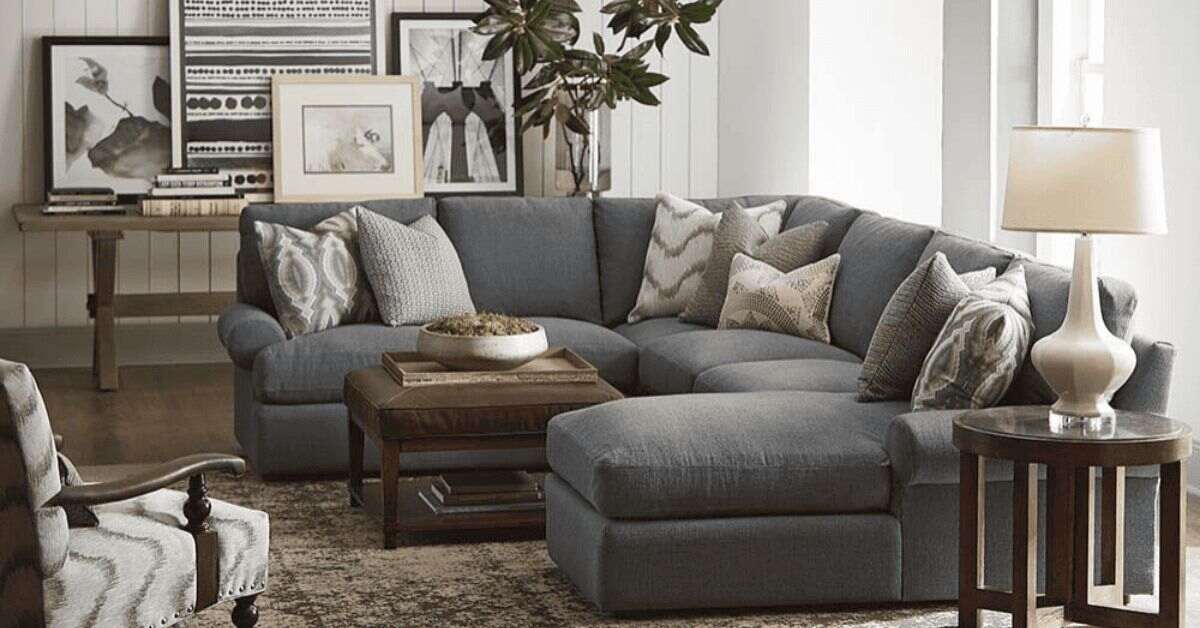
You have finally purchased a beautiful, large sectional sofa, but now you face a common challenge: What size coffee table sectional is actually right for your space? Sectional sofas are significant anchor pieces, and because of their varying shapes, a “one size fits all” formula simply does not work. Choosing the wrong dimensions can make your room feel cramped or leave the seating looking awkward. To ensure your space remains functional, you must calculate your table dimensions based specifically on your layout. This guide will help you navigate those measurements, ensuring your table doesn’t look too small or block your walking path.
Key Considerations for Your Layout
When determining the dimensions for what size coffee table sectional layouts require, you should evaluate three essential layout factors that directly affect comfort, flow, and visual balance.
The Shape (L-Shape vs. U-Shape)
L-shaped sectionals work best in corner layouts and medium-sized living rooms, offering efficient use of space. U-shaped sectionals, on the other hand, demand larger, open floor plans and typically require a wider and more substantial coffee table to maintain proper proportions.
The “Walking Path”
A functional layout depends on clear movement space. Always leave at least 30 to 36 inches of open walking space around the sectional. This spacing ensures smooth traffic flow and prevents the room from feeling cramped when deciding what size coffee table sectional fits your layout.
The Focal Point
Your sectional sofa should feel visually connected to the room’s focal point—whether that’s a TV, fireplace, or feature wall. The sofa’s length and the coffee table size should remain proportional to what the seating faces to create a cohesive and balanced design.
Quick Dimension Reference
| Sectional Type | Average Length | Average Depth |
|---|---|---|
| Small/Compact | 80″ – 100″ | 36″ – 40″ |
| Standard L-Shape | 95″ – 120″ | 36″ – 40″ |
| Large U-Shape | 120″ – 150″+ | 36″ – 40″ |
The “Two-Thirds” Rule for Sectionals
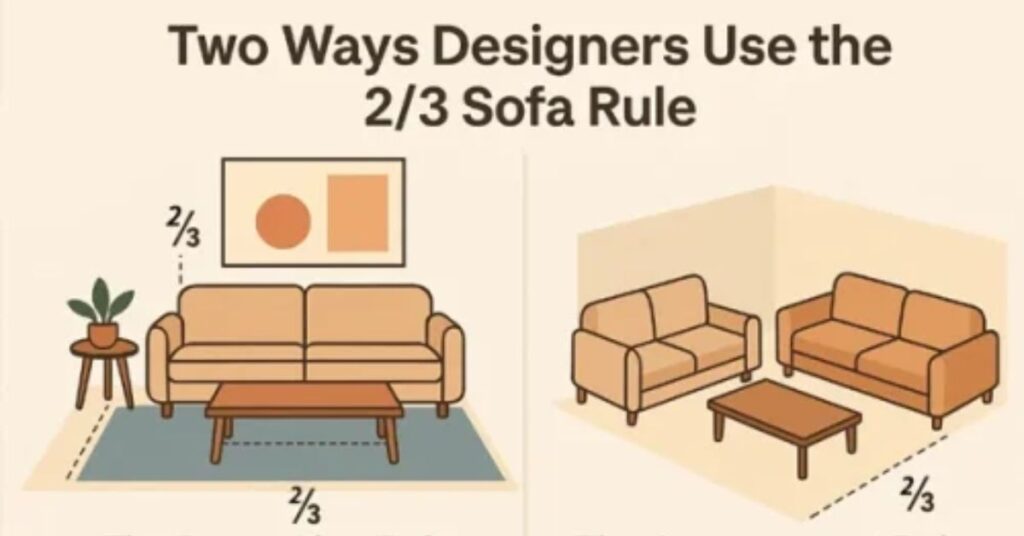
When dealing with large furniture like sectionals, visual proportion is everything. The most critical measurement for a balanced living room especially when deciding what size coffee table sectional setups require is the Two-Thirds Rule. This rule ensures that your coffee table is large enough to be functional but not so big that it overwhelms the room. It helps maintain proper spacing, improves traffic flow, and creates a visually pleasing relationship between your sectional sofa and coffee table.
What is the Two-Thirds Rule?
When dealing with large furniture, visual proportion is everything. The most critical measurement for a balanced room is the Two-Thirds Rule. This rule ensures that your what size coffee table sectional choice is functional but not overwhelming.
- The Calculation: If your sectional’s inner seating length is 90 inches, your coffee table should be approximately 60 inches long.
- Visual Balance: A table that is too small will look “lost” or insignificant in front of a massive sectional, making the room feel unfinished.
- Functionality: Following this ratio ensures that people sitting at either end of the sofa can still comfortably reach the table to set down a drink or a book.
Why Proportion Matters in Your Layout
To get the best results, keep these specific points in mind:
- Avoid the “Island” Effect: A tiny table in front of a large sectional looks like a small island in a big ocean. This is a common mistake when choosing what size coffee table sectional layouts need, as it creates an awkward gap that disrupts the flow of the room.
- Maintain Access: While the table should ideally be about two-thirds the length of the sofa, it should never be longer than the sectional itself. This balance is essential when determining what size coffee table sectional works best, as it allows for easy entry and exit from the seating area.
- Corner Considerations: For L-shaped sectionals, always measure the open space between the two “arms.” That interior rectangle is the key reference point for deciding what size coffee table sectional proportions will feel visually balanced and functional.
Quick Scale Guide
| Inner Sectional Length | Ideal Coffee Table Length (2/3) |
| 75 Inches | 50 Inches |
| 90 Inches | 60 Inches |
| 105 Inches | 70 Inches |
| 120 Inches | 80 Inches |
Clearance & Spacing
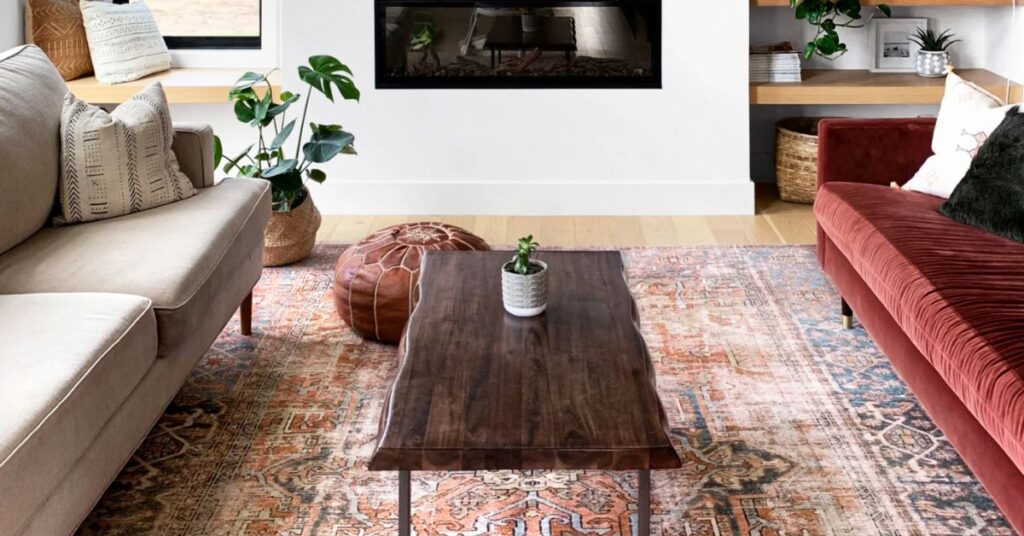
Finding a beautiful coffee table is only half the battle; where you place it is what determines the “flow” of your room. Even the most expensive table will feel like an obstacle if it is placed too close or too far from your seating.
How far should the table be from the sectional?
To achieve the perfect balance between comfort and accessibility—especially when deciding what size coffee table sectional layouts require—you should follow the 14 to 18-inch rule. This means maintaining a gap of 14 to 18 inches between the edge of the sectional cushions and the edge of the coffee table.
The Legroom Factor: A gap of around 18 inches is considered the “sweet spot” for most adults and is a key guideline when choosing what size coffee table sectional arrangements work best. It provides enough space to walk through and stretch your legs without bumping your shins on the table.
The Reachability Factor: If the gap extends beyond 18 inches, even the correct what size coffee table sectional choice can feel impractical, as you’ll find yourself leaning uncomfortably forward just to reach your drink or the remote.
Small Spaces: In tighter rooms, you can reduce the gap to about 14 inches when determining what size coffee table sectional fits best, but anything less than that will make the seating area feel cramped and difficult to navigate.
Why This Gap is Essential for Your Layout
Following this spacing rule solves three major problems:
- Traffic Flow: It ensures that guests don’t have to shuffle sideways to get to their seats.
- Safety: It prevents “knee-knocking” accidents, especially with tables that have sharp corners or metal frames.
- Visual Breathing Room: Proper spacing prevents the furniture from looking “clumped” together, allowing the design of both the sofa and the table to stand out.
Clearance Quick Summary
| Distance | Result |
| Less than 12″ | Too Tight: Difficult to walk through; uncomfortable. |
| 14″ to 18″ | Perfect Fit: Ideal for legroom and easy reaching. |
| More than 20″ | Too Far: Hard to reach items; the room looks disconnected. |
Best Coffee Table Shapes for Sectionals
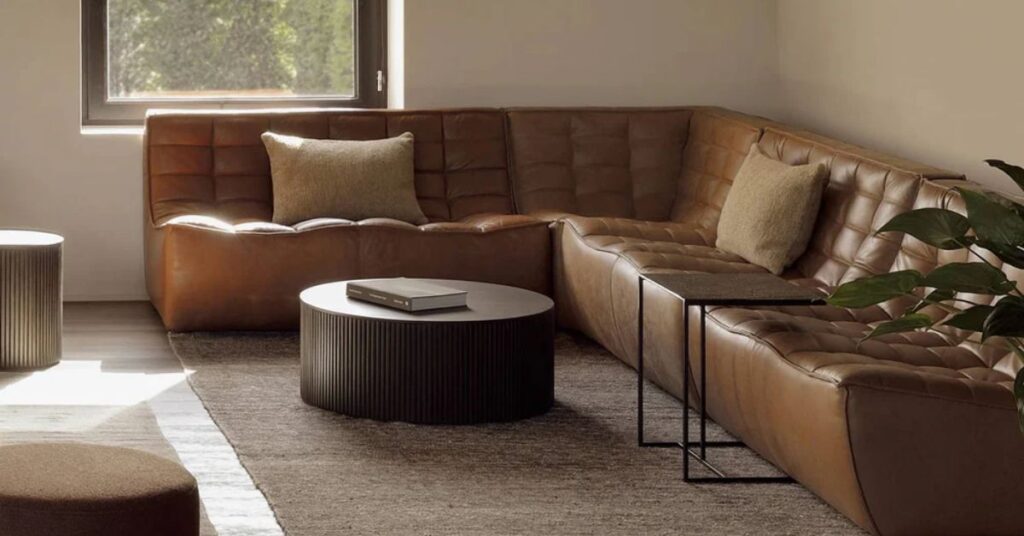
Choosing what size coffee table sectional also depends heavily on the shape of the sofa:
Round Coffee Tables: The Best for L-Shaped Sofas
Round tables are highly recommended for L-shaped sectionals when deciding what size coffee table sectional layouts need, as they provide a necessary contrast to the sharp, 90-degree angles of the sofa.
Softening the Space: A round table helps “soften” the harsh lines of a large sectional, which is an important consideration when choosing what size coffee table sectional works best for visual balance, making the room feel more inviting and open.
Safety & Movement: With no sharp edges, round tables are much safer for households with children and play a key role in determining what size coffee table sectional feels comfortable, especially when navigating the tight “L” corner without bumping knees.
Flow: Their curved footprint supports smoother foot traffic in smaller living rooms, reinforcing why round designs are often the best answer to what size coffee table sectional decisions in compact spaces.
Square Coffee Tables: Ideal for U-Shaped Sectionals
If you have a symmetrical U-shaped sectional or a large L-shape with equal sides, a square table is often the perfect fit.
- Symmetry: A square table fills the center “void” of a U-shaped layout evenly, ensuring everyone sitting on all three sides has an equal reach to the table.
- Large Surface Area: They provide a grand, substantial look that matches the scale of heavy, oversized sectionals.
- Anchoring the Room: It acts as a strong focal point that ties the three sides of the sofa together into one cohesive conversation area.
Rectangular Tables: Best for Extra-Long Sectionals
Rectangular tables are the classic choice, but they should be used strategically with sectionals.
- The Length Factor: These are ideal only if your sectional is very long on one side. A rectangular table mirrors that length, following the “Two-Thirds Rule” effectively.
- Narrow Rooms: If your living room is narrow and long, a rectangular table maintains a clear walking path better than a wide square or round table.
- Traditional Look: It provides a more formal and traditional aesthetic compared to the modern feel of a round or square piece.
Shape Comparison at a Glance
| Shape | Best Suited For | Top Benefit |
| Round | L-Shaped Sectionals | Better flow; no sharp corners. |
| Square | U-Shaped / Symmetrical | Perfectly fills the center gap. |
| Rectangular | Extra-Long Sectionals | Matches the scale of long seating. |
Sectional Height vs. Table Height
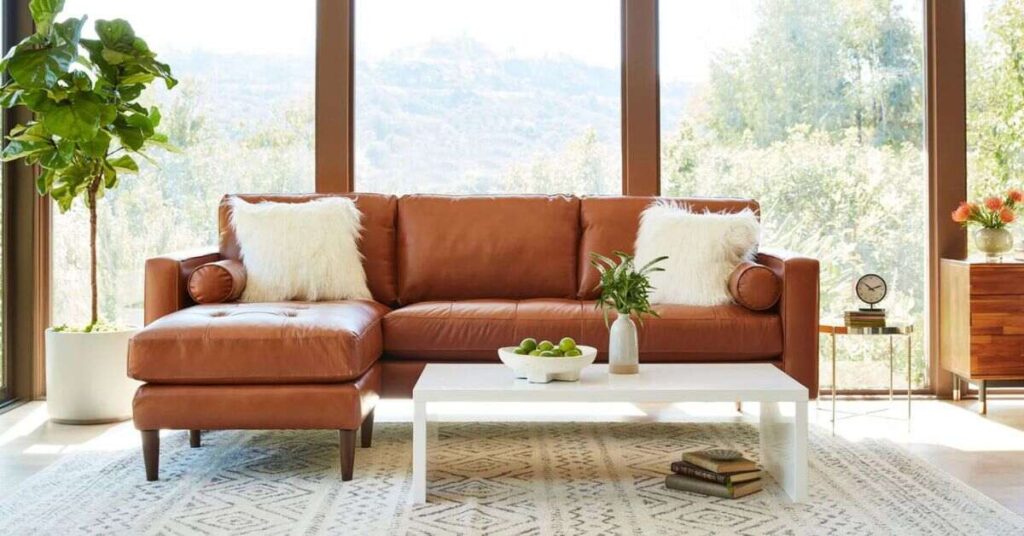
The height of your size coffee table sectional selection determines how easily you can set down a glass or rest your feet. If the table is too high, it creates a visual barrier; if it’s too low, it becomes awkward to use.
The “One-to-Two Inch” Rule
The professional standard for a balanced layout is to ensure your coffee table is 1 to 2 inches lower than the top of your sectional’s seat cushions
.
- Why Lower? A table that sits slightly below the seat level allows for a natural reach and keeps the sightlines of the room open. It prevents the furniture from looking “cluttered.”
- Modern Standards: Because many contemporary sectionals are designed with a low-profile aesthetic, standard coffee tables (18–20 inches) are often too high.
- The Sweet Spot: For modern, low-slung sectionals, look for tables that are 14 to 16 inches tall.
Why Height Alignment Matters
- Ergonomics: A table that sits slightly below seat height is easier and more comfortable to reach while seated. You won’t have to “lift” your arm up to grab your coffee.
- Aesthetic Flow: Keeping the table lower maintains the sleek, horizontal lines that make sectional sofas look so stylish in a room.
- Functionality: If you plan on using your coffee table as a footrest (with a tray for drinks), a slightly lower height is much more ergonomic for your legs.
Height Comparison Table
| Sectional Style | Average Seat Height | Ideal Table Height |
| Modern / Low-Profile | 15″ – 17″ | 14″ – 16″ |
| Standard / Traditional | 18″ | 16″ – 17″ |
| Extra Plush / High Seat | 19″ – 20″ | 18″ |
Specific Scenarios: Solving Common Problems
- For an 84-inch sofa: Based on the 2/3 rule, look for a table between 54 to 56 inches.
- For Large U-Shapes: Use one large square table or the “Two-Table” solution (nesting or twin tables) to ensure everyone can reach a surface.
- Chaise Sectionals: When calculating what size coffee table sectional, measure the interior length only and ignore the chaise.
Quick Scenario Summary
| Sectional Type | The Problem | The Solution |
| 84-inch (Small) | Finding balance in a small space. | Aim for a 55-inch rectangular or oval table. |
| Large U-Shape | Table is too far from the sides. | Use a Large Square or Two Small Tables. |
| Chaise Sectional | One side is much longer. | Measure the interior length only, ignoring the chaise. |
Material Matters
Choosing a material isn’t just about style; it’s about managing the visual weight of your furniture. Here is how to choose the right material based on your room’s needs.
Cane Coffee Tables
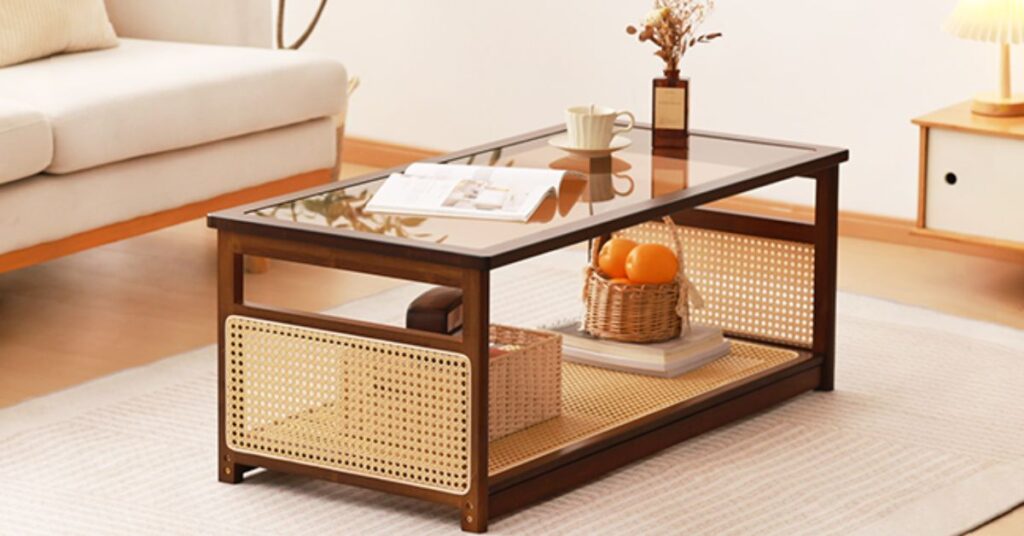
If your living room feels a bit “flat” or too modern, a cane or rattan coffee table is an excellent choice.
- Visual Interest: Cane provides a unique, woven texture that adds depth to a room without being visually overwhelming.
- The Organic Feel: It brings a touch of nature indoors, softening the heavy look of a large fabric or leather sectional.
- Lightweight Design: Because cane is naturally airy, it feels lighter than solid wood, making it great for medium-sized spaces.
Glass Coffee Tables
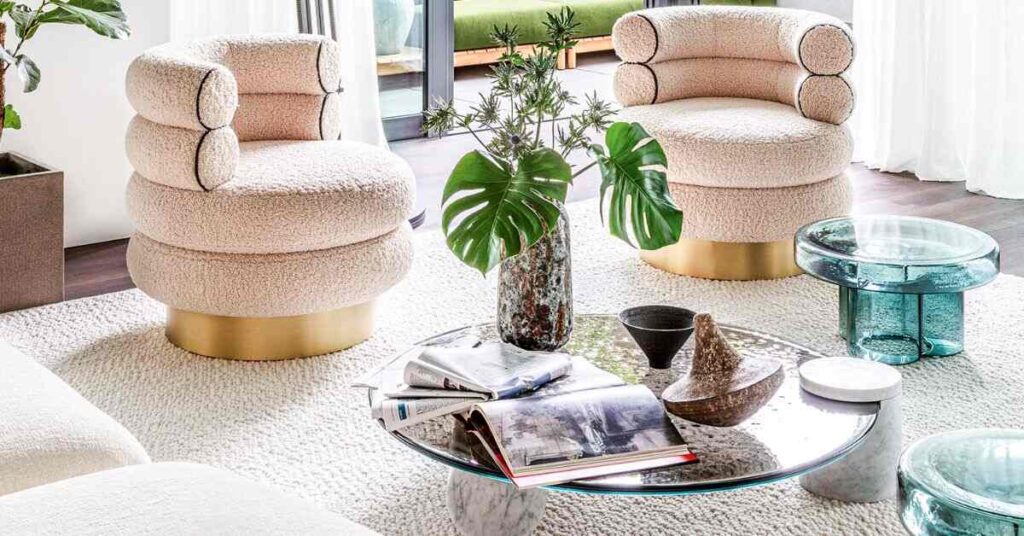
If you have a very large sectional in a relatively small room, a glass coffee table is your best friend.
- The “Invisible” Effect: Glass is transparent, which allows the eye to see the floor and the rug underneath. This prevents the room from looking “stuffed” or cluttered.
- Maintaining Space: It provides a functional surface for your drinks and books without taking up any “visual space.”
- Modern Aesthetic: Glass paired with metal frames creates a sleek, high-end look that complements modern, low-profile sectionals perfectly.
Wood Coffee Tables
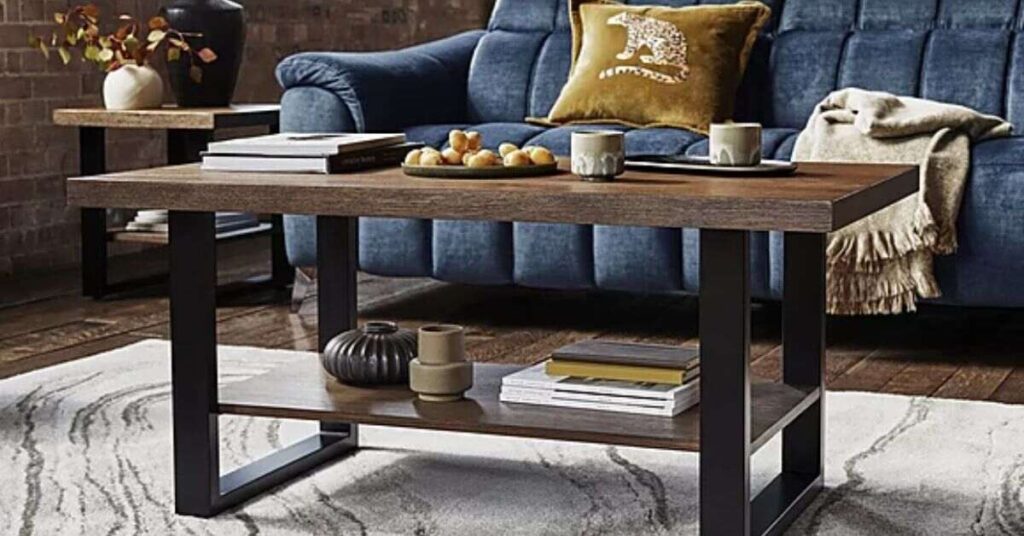
Wood remains the classic choice for households that prioritize comfort and longevity.
- The Anchor: A solid wood table acts as a strong anchor for the room, grounding the large footprint of the sectional.
- Durability: Unlike glass, wood is forgiving with fingerprints and is generally more durable for high-traffic family rooms.
- Warmth: It adds a sense of coziness and “home” that balances the coldness of metal or stone accents.
Material Selection Cheat Sheet
| Material | Best For… | Visual Impact |
| Glass | Small rooms / Large sectionals | Light: Makes the room feel bigger. |
| Cane | Adding texture / Boho style | Natural: Adds an organic, airy feel. |
| Wood | Families / Large open spaces | Heavy: Adds warmth and a solid anchor. |
Conclusion
Determining what size coffee table sectional is right for you requires balancing math with movement. By following the 2/3 rule and the 18-inch clearance rule, you turn a crowded room into a professional space.
(FAQs)
Q1: What size coffee table sectional is best for small rooms?
A: Use the 2/3 rule for length, but choose a glass material to keep the room feeling open.
Q2: How much space is needed for legroom?
A: A gap of 14 to 18 inches ensures enough legroom while keeping items within reach.
Q3: Can the table be taller than the sofa?
A: No, the table should be 1–2 inches lower than the cushions for better ergonomics.
Q4: What is the best shape for a U-shaped layout?
A: A square table is usually the most symmetrical and functional choice.
Q5: How do I measure for a chaise sectional?
A: Focus on the interior seating length to determine what size coffee table sectional fits best without blocking the chaise.