


Introduction
Understanding how big a coffee table is helps you pick a table that feels right in your living room. A coffee table serves more than just holding drinks,it connects and completes your living space. It connects your seating area and sets the balance of your space. A table that is too big will crowd your room and block movement. A table that is too small can feel lost and look awkward next to sofas and chairs. Most designers suggest using your sofa as the main guide when choosing a coffee table size. A coffee table should not overpower your seating but should still fill the space in a balanced way.
Experts also emphasize that the height and placement of the coffee table matters as much as the length and width. If it’s too high, you’ll struggle to reach items on it. If it’s too low, it may feel like a kid’s table or be uncomfortable for daily use. Most well‑designed tables sit close to the height of your sofa seat or slightly lower so you can easily reach a drink or rest your feet.
In short, picking the right coffee table size is about balance, comfort, and how the table connects all the furniture in your living area. This article explains key rules and gives practical suggestions so you get a coffee table that works and looks great.
How Big Should a Coffee Table Be: Length & Width Rules
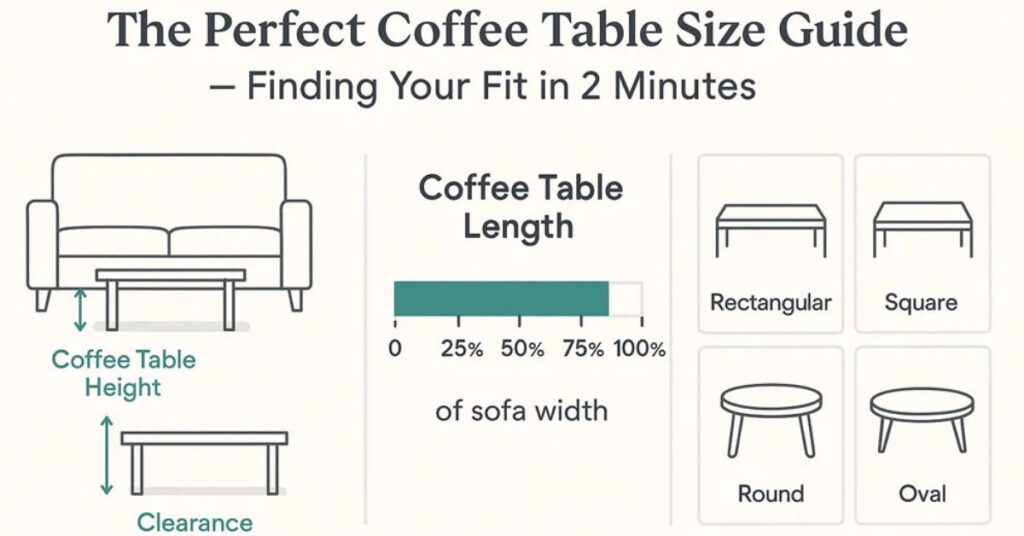
When thinking about how big a coffee table is in terms of length and width, the first rule of thumb is this: the table should be about two‑thirds the length of your sofa. This proportion creates a balanced and visually pleasing look. If your sofa is 6 feet long, a coffee table around 4 feet long usually works well.
The width of the coffee table also matters. A standard coffee table is typically between 16 and 40 inches wide. Narrow tables (under 16 inches) work well in tight spaces, while standard tables (16–40 inches) are ideal for most living rooms. Wide tables (over 40 inches) may work in larger rooms or open layouts, but be careful not to block pathways.
Another helpful guideline is about spacing. You should leave about 12 to 18 inches of space between your sofa and the coffee table. This gives enough room to move comfortably and yet allows you to reach the table easily. Too much space makes the table feel disconnected.
In general, the key factors for length and width are proportion to the sofa and allowance for comfortable movement around the table. These rules help you choose a size that is attractive and functional.
Ideal Height: How Big Should a Coffee Table Be Vertically
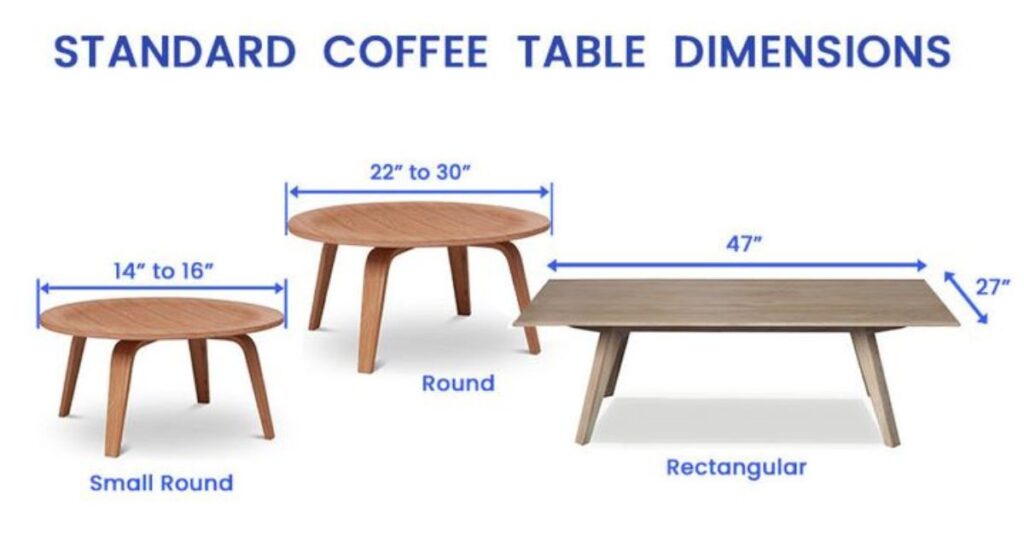
When you ask how big a coffee table is, height is one of the most important details. Most experts agree a coffee table should be about the same height as the sofa seat or slightly lower (1–2 inches less). This makes it easy to reach items and keeps the balance in your living space.
Standard coffee table height usually falls between 16–18 inches, because most sofa seats are around this height. If your sofa has very low seats, choose a lower table. If your sofa is taller than average, a slightly higher table may feel more natural.
Some designers also recommend keeping the coffee table about 1–3 inches shorter than the top of your couch cushions. This makes it easier to use the table without stretching or leaning awkwardly.
Choosing the right height makes your table comfortable to use and keeps the space looking harmonious. Always compare table height to sofa seat height before making a choice.
Shape Matters When Deciding How Big Should a Coffee Table Be

The shape of your table affects how it feels in the room and how you use the space. Rectangular tables work well in front of long sofas. These shapes offer more surface area and often sit nicely in traditional living rooms. Square tables are great with sectional seating or in larger, square‑shaped spaces. Round tables are gentle on traffic flow because they don’t have sharp corners and are ideal for smaller rooms or homes with kids.
Ovals offer similar surface area to rectangular tables but with softer edges, making them friendly in compact or narrow rooms. They also help soften boxy seating layouts. When choosing a shape, keep in mind your room layout and how people move through the space. Round or oval tables create smoother circulation, while square or rectangular ones anchor long seating areas.
The table shape should complement the size of your sofa and the overall room. A well‑chosen shape makes your living space feel open and comfortable while still providing usable surface area.
Table: Dimensions
Here’s a quick reference of common table sizes for living rooms:
| Dimension Type | Common Range | Notes |
| Length | 30–60 inches | About two‑thirds the sofa length |
| Width | 16–40 inches | Depends on room space |
| Height | 16–18 inches | Match sofa seat height |
| Spacing | 12–18 inches | Between sofa & table |
This table gives practical size ranges. You can adjust based on personal preferences or unique furniture shapes.
For Room Size

Small living rooms benefit from coffee tables that don’t overwhelm the space. In tight areas, a smaller or round table can open up pathways and keep circulation smooth. Medium rooms often have flexibility for standard rectangular shapes, while larger rooms can support bigger or square tables without feeling crowded.
Spacing around the table is key. You need enough room to walk comfortably on all sides. Designers often recommend leaving at least 30 inches clearance from the coffee table to other furniture like TV units or chairs.
Also think about how the table will be used. If you use it for serving drinks or placing decorative items, a slightly larger surface may be helpful. In smaller homes, nesting tables or bench‑style tables can be good alternatives, offering flexibility without taking up much space.
Considering these factors makes it easier to choose a table that feels right for your living room size.
Decorating Tips After Choosing Size

Once you know how big a coffee table is, styling it properly makes a big difference. Leave room on the surface for daily use, like holding trays, books, candles, or flowers. Don’t overcrowd the tabletop. Keep objects in odd numbers (like three or five items) because this often looks more natural and balanced.
Use trays to organize smaller accessories and create clean groupings. Try mixing heights and textures to add visual interest without clutter. A well‑chosen coffee table enhances the entire room’s style while remaining functional.
Conclusion
Choosing how big a coffee table can be doesn’t require exact measurements at first. Start by measuring your sofa and living space. Use the two‑thirds rule for length, match table height with sofa seat height, and leave enough clearance for comfort. Think about room size, shape, and how you use the table every day. By following these simple, furniture‑friendly tips, your table will look great and function well in your space.
FAQs
What size table should I get for a 7‑foot sofa?
For a 7‑foot sofa, aim for a coffee table around 56 inches long (two‑thirds of sofa length). Adjust width and height to keep spacing comfortable.
What’s the ideal distance between a table and the sofa?
Leave about 12–18 inches between the sofa and the coffee table. This space makes it easy to move around and still reach the table.
Can a coffee table be taller than my sofa?
A table slightly taller than the sofa seat may work, but most people prefer one that is the same height or up to 2 inches lower for comfort.
What shape coffee table is best for small rooms?
Round or oval coffee tables work well in small rooms because they allow better movement around them.
Is there a rule for table width?
Yes. Keep the coffee table width between 16–40 inches, and always leave space on both sides so it doesn’t crowd your seating area.